Buffalo Pest Control That Treats the Cause
Precision Pest Control responds across Buffalo year round, but a lot of our busiest weeks follow a big lake-effect storm or a spring thaw that floods basements near the Buffalo River and older low-lying blocks on the West Side. Storms displace pests and damage structures at the same time, which means the calls that come in afterward are usually more urgent than a routine visit. We treat those differently, starting with what the water or wind did to the property.


After a heavy lake-effect snowstorm or a spring flood along the Buffalo River, we see a spike in rodents and silverfish pushed indoors by displaced ground moisture and damaged foundations. Cockroaches and ants follow standing water into basements that took on runoff during a fast thaw. Crickets show up in numbers after a wet stretch, drawn to damp foundations and window wells. Bed bugs sometimes travel in with people displaced from storm-damaged units, and birds move into gaps left by wind damage to soffits, gutters, and roof vents. Buffalo's older housing stock, much of it a century old, tends to take the brunt of all of this.
Pests we Specialize in Removing and Preventing














Pest Control Services from $57!
Schedule a FREE Estimate
Qualified and Trained Technicians

Proven Track Record and Reviews

Eco-Firendly and Safe Solutions

Transparent Pricing and Guarantee
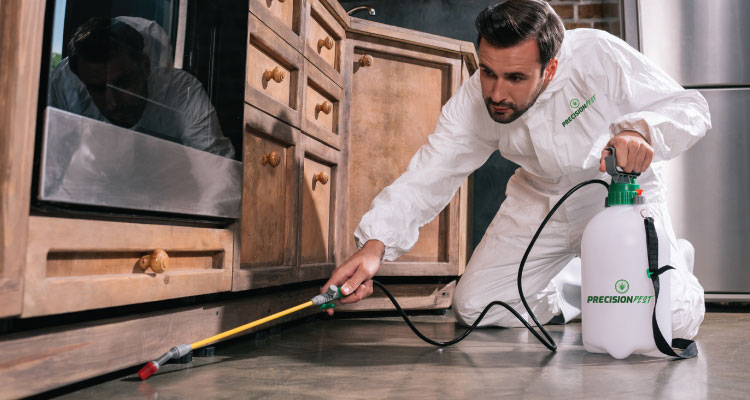
Buffalo's weather does real damage to a building, not just an inconvenience, and that shapes how we handle a lot of our calls here. A heavy lake-effect dump followed by a fast melt sends water into places it doesn't belong, old foundation cracks along the West Side and near the Buffalo River waterfront, window wells that ice over and back up, roof lines stressed by the weight of repeated snow load. Once water gets into a basement or a wall cavity, it doesn't just sit there, it draws every moisture-seeking pest in the area toward that one spot, and it can also loosen siding, soffits, and roof vents enough to open a new entry point that wasn't there before the storm.
That's why our post-storm visits start outside, walking the property to find what actually changed, a gutter pulled loose, a new gap at the sill plate, standing water that wasn't there last month, rather than just re-treating wherever we sprayed before. Rodents in particular move fast after a flood, since a displaced colony near the Buffalo River or in an older Elmwood Village basement will relocate to the nearest dry, dark space within days, and that's often the inside of a house. We'd rather catch that shift in the week after a storm than wait for a full-blown infestation to show up once the weather's already calmed back down.

See at Pest World!




See at Pest World!

Our Pest Control Service Locations
Florida
Arizona
Texas
Tennessee
Utah
Alabama
Hawaii
Pennsylvania
North Carolina
